
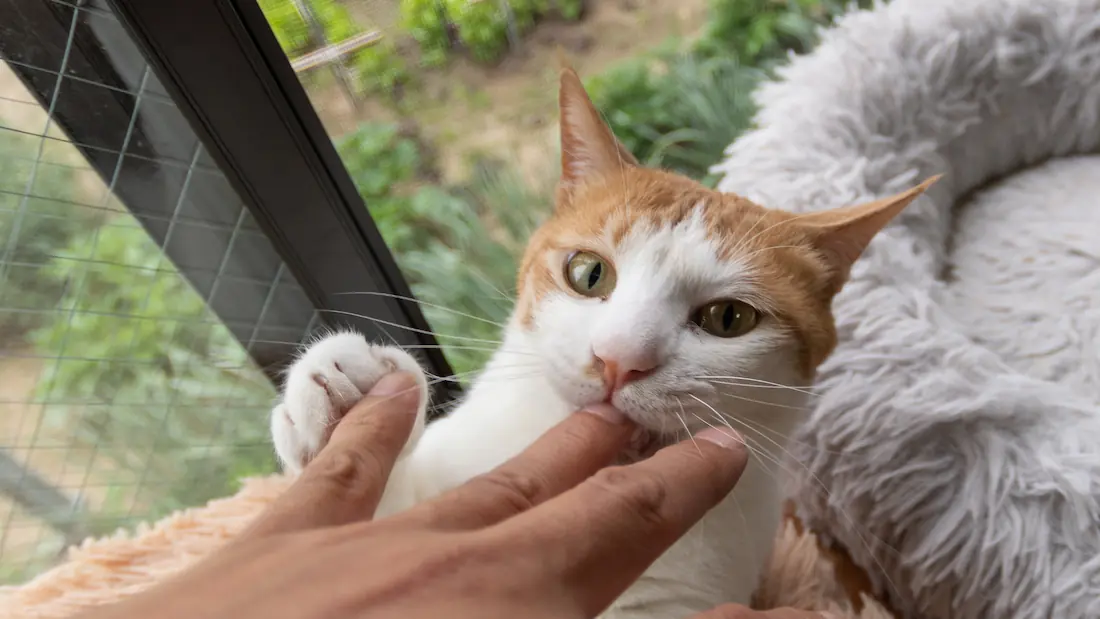
Have you ever been relaxing with your cat when they suddenly lean over and bite you gently? Many cat owners have experienced this seemingly odd behavior. A soft bite can seem random, but it’s often your cat’s way of communicating something—love, playfulness, or even mild irritation.
So, why does my cat bite me gently out of nowhere? The answer depends on context. Cats bite for many reasons, and understanding their body language, personality, and triggers can help you respond appropriately.
Gentle Bites Are a Form of Communication
Cats are complex creatures, and they rarely do something “out of nowhere.” When your cat bites you softly, they’re usually sending a message. Gentle biting is part of normal feline behavior, and it’s often a subtle way to express feelings or needs.
Here’s what your cat might be saying when they gently bite you:
- “I’ve had enough.” During a petting session, some cats get overstimulated and use a small nip as a signal to stop.
- “Pay attention to me.” Cats sometimes bite gently to get your attention, especially if they want to play or cuddle.
- “I love you.” A soft cat love bite can be a sign of affection, similar to how cats groom each other.
- “Please give me space.” Some cats use a gentle bite as a warning before more aggressive biting occurs.
Reading your cat’s body language helps you identify what they’re trying to say before the teeth come out. Look for subtle warning signs like tail swishing, ear flattening, or a tensing of the muscles. These clues tell you it’s time to stop petting before your cat crosses the line from affection to irritation.
Cat Love Bites: When Cats Show Affection With Their Teeth
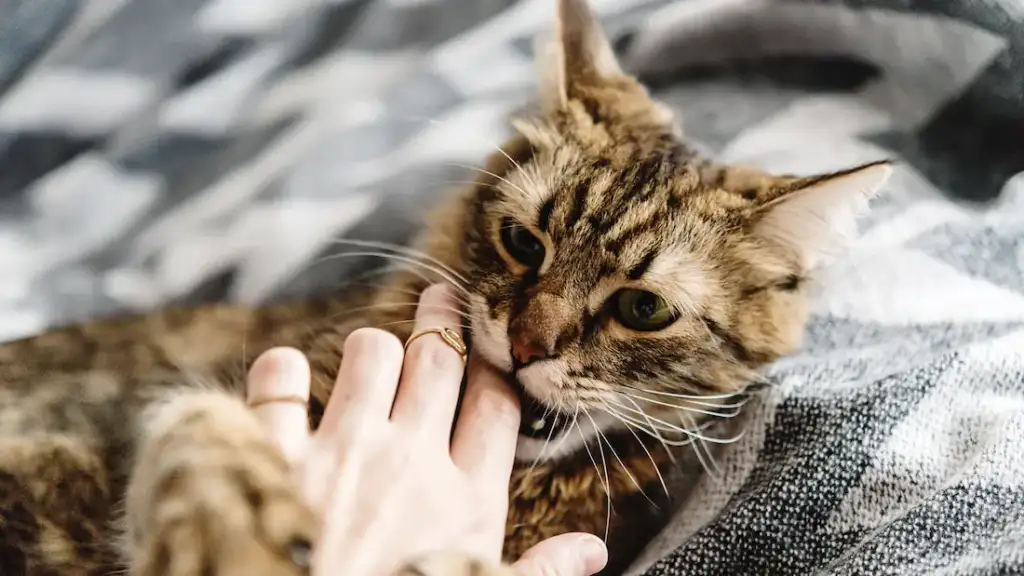
While it can be surprising, cat love bites are usually harmless. A love bite is your cat’s way of saying, “You’re part of my family.” Cats that share a close bond often lick and gently bite their human companions just as they would other cats.
Why Cats Give Love Bites
- Grooming behavior: Cats lick and nibble each other as part of mutual grooming. When your cat does this to you, it’s a natural extension of their social behavior.
- Learned bite inhibition: Kittens learn how hard to bite through play. Adult cats with good bite inhibition know how to deliver a soft, harmless nip.
- Comfort and trust: Cats rarely expose their sharp teeth around someone they don’t trust. A gentle bite that doesn’t break the skin can actually signal cat love and safety.
Love bites typically happen when your cat is feeling affectionate—during petting, cuddles, or even while sitting in your lap. It’s part of how cats connect emotionally with their pet parents.
However, if your cat’s gentle nibble turns into aggressive behavior or leaves a bite wound, it’s time to set clear boundaries.
When Playful Biting Becomes Aggressive Behavior
Cats are natural hunters, and even indoor cats have strong hunting instincts. A playful biting session might start innocently, but can escalate quickly, especially in kittens or young adult cats.
During play, your cat may use their front legs to grab you and gently bite as if you’re prey. This behavior is normal but should be redirected before it becomes painful or destructive.
Why Cats Bite During Play
- Feeling playful: Cats use biting to simulate hunting.
- Boredom: A cat without enough stimulation may bite just to get your attention.
- Lack of toys: Without an appropriate toy, your cat might mistake human hands for a plaything.
To stop cat bites during play, provide engaging outlets for energy:
- Offer puzzle feeders and interactive toys that let your cat “hunt.”
- Use a scratching post or climbing tower to keep your cat entertained and active.
- Rotate toys regularly to prevent boredom.
Never use your hands during playtime. Cats don’t understand that biting a toy is fine but biting a person isn’t. Encouraging gentle play from the start helps reinforce acceptable behavior and prevents future biting problems.
Recognizing Overstimulation During Petting
Sometimes, cats bite because they’ve simply had enough touching. During a petting session, affection can quickly cross a fine line into irritation.
Watch for These Warning Signs
- Tail swishing or twitching
- Ear flattening
- Tense muscles or skin rippling
- Growling or sudden movements
When you see these cues, it’s best to stop petting. Respecting your cat’s comfort level helps build trust and reduces the risk of future bites. Keeping petting sessions short and calm can make a big difference.
Pain or Medical Issues Can Trigger Biting
If your cat’s gentle nibbles feel out of character or come with other changes—like hiding, hissing, or avoiding touch—it might not be behavioral at all. Sometimes, cat bites are linked to pain or discomfort.
Common Health-Related Causes:
- Dental problems: Tooth pain or gum disease can make your cat more irritable.
- Skin issues: Fleas, allergies, or dermatitis can make certain areas sensitive to touch.
- Joint pain or injury: Arthritic cats may bite when a sore spot is handled.
If you suspect your cat’s biting is related to pain, schedule a check-up at your local Johns Creek vet. At ModernVet, our team can perform a full wellness exam to identify underlying issues. We also offer dental care to address problems involving your cat’s teeth or gums that could be contributing to discomfort.
Aggressive Biting vs. Gentle Biting
It’s important to distinguish between a love bite and aggressive biting. Gentle bites are usually controlled, while aggressive ones are accompanied by defensive or fearful body language.
Signs of Aggressive Body Language
- Ears pinned back tightly
- Hissing or growling
- Dilated pupils
- Rapid tail flicking
- Arched back or puffed fur
Aggressive biting often stems from fear, stress, or redirected aggression. For example, when your cat sees another animal outside and lashes out at you instead.
If your cat frequently displays aggressive behavior, talk with your veterinarian about possible causes. We can help identify triggers and develop strategies for managing stress and aggression safely.
How to Respond to a Gentle Bite
When your feline friend bites softly, your response matters. Cats learn through positive reinforcement, and how you react can shape future behavior.
What to Do:
- Stay calm. Avoid sudden movements or yelling.
- Stop petting immediately. This teaches your cat that biting ends attention.
- Slowly distance yourself. Move your hand away gently so they don’t see it as prey.
- Redirect attention. Offer an appropriate toy or interactive play to change focus.
- Reward good behavior. Praise or give treats when your cat relaxes without biting.
What Not to Do:
- Don’t hit or push your cat. Physical negative feedback only increases stress.
- Don’t use your hands to play. This blurs boundaries between affection and hunting.
- Don’t pull away fast. Quick motions can trigger your cat’s defense mechanism.
Preventing Future Cat Bites
Most cat bites can be prevented by understanding and respecting your cat’s natural instincts.
Tips to Reduce Gentle or Aggressive Biting:
- Keep petting sessions short and end before your cat gets overstimulated.
- Learn to recognize warning signs like tail swishing or ear flattening.
- Provide plenty of enrichment—scratching posts, puzzle feeders, and interactive playtime help keep your cat entertained.
- Offer toys to instigate fun in a safe, controlled way.
- Give adult cats and kittens regular outlets for energy through climbing, chasing, and pouncing.
When to Contact Your Veterinarian
A cat bite might seem harmless, but even a gentle bite can lead to an infection if bacteria enters the skin. If your cat ever breaks the skin, wash the area immediately and contact your doctor, who can prescribe antibiotics to prevent a cat bite infection.
For your cat’s health, it’s best to speak with your veterinarian if:
- Biting becomes frequent or intense.
- You notice signs of pain or avoidance.
- There’s a sudden change in your cat’s temperament.
Trust and Body Language in Feline Behavior
Understanding your cat’s body language is key to building trust and reducing biting incidents. Cats communicate mostly through subtle physical cues rather than vocal sounds.
Pay Attention To:
- Tail movements: A swishing tail means irritation.
- Ears: Forward ears show interest; flat ears show discomfort.
- Eyes: Slow blinks are friendly; wide pupils mean stress.
When you learn your cat’s signals, you can respond appropriately—backing off when needed or encouraging play when they’re feeling playful. These small adjustments strengthen your bond and reduce confusion.
Teaching Bite Inhibition to Kittens and Adult Cats
Pet parents: training isn’t just for dogs. Cats can learn proper boundaries, too. Bite inhibition training teaches cats to control how hard they bite.
How to Encourage Learned Bite Inhibition
- End play immediately when your cat bites too hard.
- Offer soft toys as replacements for hands or fingers.
- Praise and reward acceptable behavior with treats and affection.
- Use consistent cues and reactions to help your cat learn what’s okay.
Starting young helps, but even adult cats can learn. Gentle consistency, positive reinforcement, and patience are key.
Decode Your Cat’s Body Language
Noticing some love bites from your feline friend? Most of the time, it’s not aggression, it’s communication. Gentle cat bites are often signs of affection, playfulness, or mild overstimulation. By paying attention to body language, respecting boundaries, and providing healthy outlets for energy, you can maintain a happy, bite-free relationship with your feline friend.
If you’ve noticed more frequent biting or suspect an underlying reason such as pain or stress, reach out to ModernVet, your trusted vet in Johns Creek. Our team is here to help cat parents understand their pets better and keep them healthy, happy, and purring for years to come.