
SUMMARY
Lyme disease in dogs is caused by the bite of infected black-legged ticks, which transmit the bacterium Borrelia burgdorferi. However, most exposed dogs never develop clinical disease. This guide will walk you through how Lyme is transmitted, what a positive test actually means, how a vet treats Lyme, and the best prevention strategies.
It’s pretty common knowledge that Lyme disease in dogs is spread through tick bites. But did you know a positive Lyme test doesn’t mean a dog will necessarily deal with symptoms of Lyme disease? It just means the dog was exposed.
As a Veterinarian in Johns Creek, GA, Lyme cases aren’t particularly common around here. There’s not a huge prevalence of Lyme disease in our area. Traditionally speaking, Lyme disease is much more of a Northeastern United States issue. But it’s certainly still possible, especially for dogs that spend extended time in the woods or high grass and dogs that routinely travel north. That’s why we are prepared to identify signs of lyme disease and get dogs proper treatment when they need it.
How Do Dogs Get Lyme Disease?
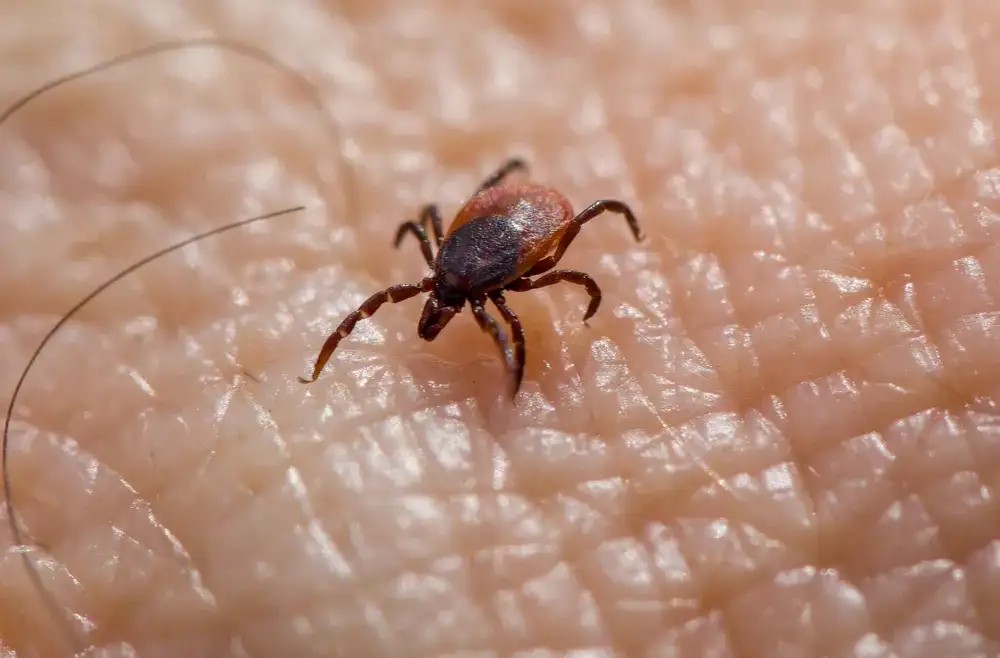
Caused by the bacterium Borrelia burgdorferi, dogs contract Lyme disease from bites by infected black-legged ticks known as Ixodes scapularis here in the eastern US and Ixodes pacificus on the west coast.
Once a tick bites and latches on to its victim, it typically takes 24-48 hours of attachment before the bacteria is transmitted. This is why routine tick checks and prompt removal are so important. Removing a tick within 24 hours of a bite dramatically reduces the risk of transmission.
Here’s a look at ticks found in the United States and how likely they are to transmit Lyme disease.
| Tick Species | Common Name | Primary Region (US) | Lyme Risk |
|---|---|---|---|
| Ixodes scapularis | Black-legged tick / Deer tick | Northeast, Midwest, Southeast | High |
| Ixodes pacificus | Western black-legged tick | Pacific Coast (CA, OR, WA) | High |
| Ixodes ricinus | Sheep tick / Castor bean tick | Europe, UK | High |
| Amblyomma americanum | Lone Star tick | Southeast, South Central US | Low — does not efficiently transmit Borrelia burgdorferi |
| Dermacentor variabilis | American dog tick | Widespread US | Negligible — not a Lyme vector |
Sources: CDC — Lyme Disease Transmission; Eisen RJ et al. (2017) Emerg Infect Dis.
Most human and canine Lyme infections are caused by nymphal ticks. These are tiny, immature ticks about the size of a poppy seed, making them harder to detect than adult ticks, which are larger and much more visible.
The bacterium that causes Lyme, Borrelia burgdorferi belongs to the spirochete family. It lives in a tick’s midgut and migrates to its salivary glands during feeding, which is what causes the 24-48 hour attachment window.
What Are the Signs of Lyme Disease in Dogs?
Most dogs infected with the Borrelia bacteria never develop symptoms. In fact, only 5-10% of infected dogs go on to show signs of illness. But the few that do can be at risk of serious complications if left untreated.
The most common and recognizable symptom is leg lameness that shifts from one limb to another. Other common symptoms include:
- Fever
- Lethargy
- Decreased appetite
- Swollen joints
- Swollen lymph nodes
And these signs can be easy for an owner to attribute to something else. A stiff or sore dog may just look like he overdid it yesterday or is starting to get older.
It’s also easy for dog owners to overlook these signs because they typically start to present 2-5 months after the initial infection, not immediately after a tick bite.
It’s important to recognize early red flags and get prompt veterinary care before a dog experiences any major complications. For example, lyme nephritis is a serious, uncommon complication where immune-mediated kidney disease develops, and it can be fatal. This complication is often accompanied by protein in urine, weight loss, vomiting, and increased thirst along with the typical lyme symptoms.
How Is Lyme Disease Diagnosed in Dogs?
We diagnose lyme disease by combining a dog’s history of tick exposure, clinical signs, and blood tests, the latter of which is usually an antibody test that can detect Borrelia burgdorferi antibodies.
The SNAP 4Dx is one of the more effective diagnostic tests, as it detects those Borrelia antibodies as well as heartworm and other tick-borne diseases, all with one blood sample. This is a common screening method and is often part of annual wellness bloodwork.
There are also antibody titers, which is quantitative antibody testing that can help ascertain the level of exposure and whether levels are going down with treatment, making it very useful when monitoring how a dog is responding to treatment.
PCR testing is another option that detects Borrelia DNA directly. This is less common than other diagnostic tests, but it can help in ambiguous cases or when other testing is inconclusive.
Here’s a look at possible test results and what they mean (or don’t mean):
| Test Result | What It Means | What Happens Next |
|---|---|---|
| Positive antibody test (e.g. 4Dx/SNAP) | The dog has been exposed to Borrelia burgdorferi and mounted an immune response. Does NOT confirm active infection or disease. | Vet evaluates for clinical signs, orders urine protein test (UPC ratio) and full bloodwork to assess kidney function before deciding whether to treat. |
| Positive antibody test + clinical signs | Evidence of exposure plus active clinical signs (lameness, lethargy, fever, swollen joints). Most likely active Lyme disease. | Antibiotic treatment (typically doxycycline 30 days) is recommended. Monitor for response within 3–5 days. |
| Positive antibody test, no clinical signs | Exposure confirmed; dog has not developed clinical disease. This is the most common outcome — most exposed dogs never become sick. | Treatment decision is made case-by-case. Many vets monitor without treating; key is checking UPC ratio to screen for early kidney involvement. |
| Negative antibody test | No detectable antibodies. May mean no exposure — or early infection before antibodies develop (can take 4–6 weeks post-bite). | If clinical signs are present and tick exposure is likely, retest in 4–6 weeks or consider PCR testing if high suspicion remains. |
| Lyme nephritis | Rare but serious: immune-mediated kidney disease triggered by Lyme infection. Labrador Retrievers and Golden Retrievers are at highest risk. | Aggressive treatment required — antibiotics plus medications to support kidney function. Prognosis is guarded. Requires specialist referral in severe cases. |
Sources: Littman MP et al. (2018) J Vet Intern Med — ACVIM Consensus Update on Lyme Borreliosis in Dogs and Cats. Merck Veterinary Manual — Lyme Borreliosis. merckvetmanual.com
That said, no diagnostic test is perfect. If I have a completely asymptomatic dog with an unexpected positive result, personally, I may repeat testing using a different manufacturer before we go down the entire diagnostic and treatment pathway.
Once we’re comfortable that we’re dealing with true Lyme exposure, then I want to evaluate the patient, not simply react to a positive antibody test. A positive Lyme test indicates exposure. It does not automatically mean the dog currently has clinical Lyme disease.
What Does a Positive Lyme Test Actually Mean?
This bears repeating: A positive Lyme test is not a Lyme diagnosis, but rather evidence of exposure, as the table above shows. There is a big difference between the two, as it impacts whether and how a dog is treated.
As many of 90-95% of seropositive (positive antibody test) dogs remaining asymptomatic. This is where things get tricky, as the treatment of Lyme positive, asymptomatic dogs is a contested topic in veterinary medicine.
The current ACVIM consensus recommends antibiotic treatment when a dog has clinical signs and a positive antibody test. Asymptomatic dogs with a positive test and protein in their urine should also be treated, as they could be at risk of the uncommon but serious Lyme nephritis.
If the dog is completely asymptomatic and doesn’t have concerning findings on its additional evaluation, then I think monitoring can be very reasonable rather than automatically putting every Lyme-positive dog on antibiotics.
We’re not saying, “Your dog tested positive, therefore your dog is seriously ill.” We’re saying, “Your dog has evidence of exposure. Now let’s make sure that exposure isn’t affecting the dog in a clinically meaningful way.”
If the dog does have clinical signs consistent with Lyme disease, that becomes a different conversation and treatment becomes much more straightforward.
How is Lyme Disease Treated?
The most common treatment for Lyme disease in dogs is antibiotic therapy, typically 30 days on doxycycline, and most dogs see significant improvement in just 3-5 days. Symptoms clear so quickly because of doxycycline’s effectiveness against Borrelia burgdorferi.
However, it’s worth nothing that reinfection is possible. While antibiotics clear the current infection, they do not provide everlasting immunity. Dogs in tick-endemic areas are at particular risk, which is why routine tick checks are so important even after treatment.
C6 antibody titers tend to decline following proper treatment. Checking for titers about six months after treatment can help confirm whether the infection has been cleared.
A dog dealing with Lyme nephritis requires a much more aggressive treatment that features antibiotics plus additional medications that support kidney function and mitigate protein loss. Your vet may refer a specialist in severe cases. If your dog shows any signs of this complication, seek Urgent Care in Johns Creek, GA immediately. While Lyme nephritis is treatable, the prognosis is guarded.
How Do You Prevent Lyme Disease in Dogs?

Keeping your dog away from ticks is the single best way to prevent Lyme disease, so try to reduce your dog’s exposure to tick-infested areas while also utilizing tick preventative medications, getting your dog vaccinated where appropriate, and performing routine, thorough tick checks after they’ve been outdoors.
| Prevention Method | How It Works | Notes |
|---|---|---|
| Tick preventatives (topical/oral) | Kill or repel ticks before they can transmit Borrelia — transmission requires tick attachment for 24–48 hours | Most important single prevention step. Options include isoxazoline class (Bravecto, NexGard, Simparica) and others — vet to recommend based on dog’s health profile |
| Lyme vaccination | Stimulates immune response against Borrelia burgdorferi outer surface protein — reduces risk of infection and disease severity | Recommended for dogs in high-exposure areas or tick-endemic regions. Requires initial 2-dose series then annual booster. Does not eliminate need for tick preventatives |
| Tick checks after outdoor activity | Physical removal of ticks before they can complete blood meal and transmit bacteria (transmission window: 24–48 hours) | Check all areas: between toes, ears, groin, around collar, tail base. Remove with fine-tipped tweezers or tick removal tool — not fingers, not petroleum jelly |
| Environmental management | Reduce tick habitat around home — mow tall grasses, clear leaf litter, create wood chip barrier between lawn and wooded areas | Most effective in combination with tick preventatives |
| Avoiding high-risk areas | Wooded areas, tall grasses, leaf litter — peak tick season spring and fall, but year-round risk in warm climates including Georgia | In tick-endemic areas like the Southeast US, year-round tick prevention is recommended regardless of season |
Sources: AVMA — Lyme Disease in Dogs; Merck Veterinary Manual. Transmission window (24–48 hours): Eisen L (2020) Ticks Tick Borne Dis.
While not a replacement for tick preventatives, the Lyme vaccine is a topic worth discussing with your vet. It works by targeting proteins on the Borrelia bacteria’s outer surface and can help reduce the severity of infections or prevent them entirely. The vaccine is especially recommended for dogs with high tick exposure, especially in tick-endemic areas.
Here in Georgia, we don’t see an overabundance of lyme cases, but that doesn’t mean they can’t happen. Because of our more mild winters, Ixodes scapularis is present year-round, while tick activity is much more seasonal in northern states. That’s why I recommend scheduling some time to meet with us and discuss methods of getting your dog the best Preventive Care in Johns Creek, GA.
Frequently Asked Questions
| Question | Answer |
|---|---|
| When do you recommend the Lyme disease vaccine for dogs? | I think about lifestyle and exposure. If you have a hunting dog that’s spending all day in the woods or a working dog that has a really high tick load and is constantly getting exposed to ticks, then I think vaccination is worth considering. The other big one is travel. If the dog is regularly traveling into areas with substantially more Lyme disease, particularly North Carolina and farther north, that changes my conversation about vaccination. |
| What clinical signs suggest a dog is dealing with Lyme disease? | One of the classic signs we think about is shifting-leg lameness. Maybe the dog seems painful or lame on one leg and then later seems painful somewhere else. You can also see stiffness and painful joints. An unexplained fever gets my attention too, particularly when you combine it with a history of tick exposure. Those are the situations where tick-borne disease starts moving higher on my differential list. |
| What are the best tick prevention methods in Johns Creek and North Atlanta? | I generally recommend one of two approaches depending on both client compliance and patient compliance. If the owner is really good about giving monthly medication and the dog is easy to medicate, then an oral preventive is a great option. I personally like Credelio Quattro. If convenience is really important to the owner or getting pills into that particular dog every month is a nightmare, then I really like the injectable options. Being able to provide long-acting heartworm and flea/tick prevention removes a lot of the compliance issue because we give the injections and it’s done. |
What to Do When Your Dog is Exposed to Lyme Disease
Remember, a positive Lyme test is not something to panic over. It’s not even a Lyme disease diagnosis. Most Lyme infected dogs never develop symptoms. But some do, and those symptoms can turn into serious complications like Lyme nephritis if left untreated. That’s why considering the best Wellness Plans in Johns Creek, GA for your dog can go a long way.
The best course of action is to schedule a Veterinary Appointment in Johns Creek, GA to get your dog appropriate follow-up testing, discuss treatment options with your vet, and prioritize consistent prevention methods moving forward.
I recommend year-round prevention. Man, we’re in Georgia. It just doesn’t get consistently cold enough here. We have mosquitoes essentially year-round, which obviously matters for heartworm disease. And although we’re talking specifically about Lyme disease here, flea, tick, and heartworm prevention all tend to become part of the same larger parasite-prevention conversation.
It also doesn’t get cold enough here to reliably eliminate our flea and tick exposure. In some northern parts of the country, there may be periods where parasite activity drops substantially during winter. Down here, I wouldn’t rely on that. You best believe you need to be on prevention year-round. I’ve seen fleas in the dead cold of winter.
While it can lead to serious complications, Lyme disease in dogs is often extremely treatable. Utilize lyme disease prevention methods, perform routine tick checks, know the warning signs, and get your dog to the vet as soon as you suspect something is off.