SUMMARY
Most dog owners have never heard of gastric dilatation-volvulus (GDV), or bloat, but it is one of the most rapidly life-threatening conditions a dog can face. And without emergency intervention, bloat in dogs can be fatal within hours.
When a dog experiences GDV, its stomach fills with gas and twists on itself, which in turns cuts off blood supply to vital organs. Here at ModernVet in Johns Creek, GA, we have seen that GDV can progress incredibly quickly. One of the biggest challenges is that it’s not always easy to tell the difference between simple bloat, a true gastric dilatation-volvulus (GDV), or just acute abdominal pain from any number of other conditions.
This guide will walk you through the early warning signs, the most at-risk dog breeds, and what actions to take if you suspect bloat.
What is GDV (Bloat) in Dogs?
GDV is a condition that causes a dog’s stomach to fill with gas and rotate on itself. GDV begins with simple bloat (gastric dilatation only), but can rapidly progress to full GDV, which is far more dangerous.
GDV is such a dire condition because the dog’s twisted stomach cuts off blood flow to the stomach and spleen, putting pressure on vital organs, which can cause cardiac arrhythmias, tissue death, and septic shock, all in a matter of hours.
What Are the Early Signs of GDV?
The classic signs I tell owners to watch for are restlessness, repeatedly trying to get comfortable, stretching, lying on their side, panting or gasping, an enlarged or tight abdomen, and a stomach that feels very firm when touched.
| Early Signs | Emergency Signs |
| Restlessness | Unproductive retching/dry heaving |
| Panting | Swollen belly |
| Gasping | Breathing difficulties |
| Lying on their side | Abnormal heartbeats |
The most common thing I hear is, “He’s just tired,” or “He probably got into the trash and has an upset stomach.” Sometimes that’s true. Unfortunately, sometimes it’s the beginning of GDV.
Because this condition can become life-threatening so quickly, I always encourage owners of at-risk dogs to err on the side of caution. Time truly matters with this condition.
Which Are the Most At-Risk Dog Breeds for GDV?
Large dogs with deep chests face the highest risk of developing GDV, like Great Danes, German Shepherds, Standard Poodles, Weimaraners, Saint Bernards, Doberman Pinschers, and Labrador Retrievers.
The breeds we see GDV in most at our practice are exactly what you’d expect: Great Danes, Bernese Mountain Dogs, and other large, deep-chested breeds.
That said, breed isn’t the whole story. Older dogs and first-degree relatives of at-risk GDV breeds face significantly higher lifetime risk.
What Causes Bloat in Dogs?
Researchers haven’t been able to pin down the exact cause of GDV, but known contributing factors include rapid eating, one large daily meal, and strenuous activity immediately before or after eating.
A dog’s individual anatomy and body conformation are important considerations as well, as unusually deep-chested dogs face risk. When a dog’s stomach fills with gas, a deep chest allows the stomach to twist, causing extremely serious effects.
While a dog’s anatomy is out your control, other risk factors aren’t. Here are some steps you can take to reduce your dog’s risk.
- Feeding Frequency: Make sure your dog is having two or three smaller meals throughout the day.
- Rapid Eating: If your dog tends to scarf down its food quickly, I recommend using a slow-feeder bowl.
- Pre/Post-Meal Activity: Avoid vigorous exercise immediately before or after eating to reduce your dog’s risk of gastrointestinal distress.
I’ve seen a lot of internet conjecture suggesting raised food bowls can increase risk of GDV. The evidence on raised food bowls is mixed, so I don’t make a strong recommendation either way. Depending on which studies you read, you’ll find different conclusions, and I don’t think we have enough evidence to confidently say they’re beneficial or harmful.
How is Bloat in Dogs Diagnosed?
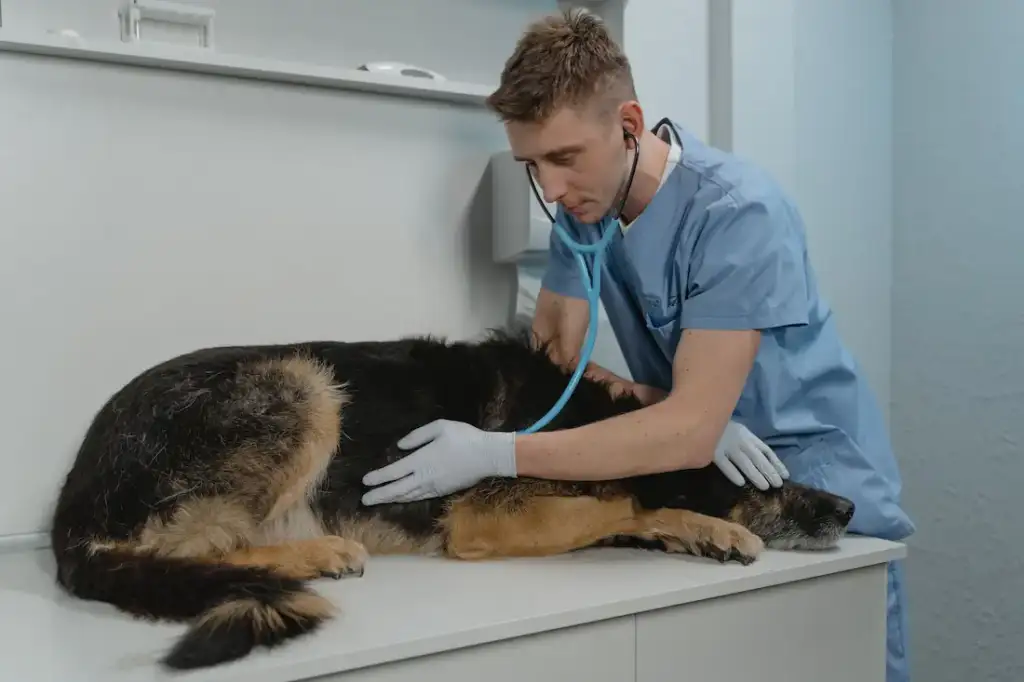
Bloat/GDV is diagnosed with a physical exam and x-ray, the latter of which confirms GDV with a “double bubble” pattern. A physical exam entails checking for abdominal swelling, observing the dog’s pain response, measuring its heart rate, and looking for signs of shock.
We’ll typically run blood work to evaluate how the dog’s organs are functioning and check for cardiac arrhythmias before surgery. As I mentioned before, time is of the essence, and less time between the presentation of symptoms and surgical intervention means a better chance at survival. Don’t wait. If you suspect your dog is showing GDV symptoms, see a vet immediately.
How is Bloat in Dogs Treated?
Treatment typically involves emergency surgery that focuses on correcting the twist, evaluating the stomach and surrounding organs for damage, and permanently tacking the stomach to the body wall with a gastropexy to dramatically reduce the risk of it twisting again. In severe cases with significant blood loss or tissue death, a blood transfusion may be necessary.
Before we perform pet surgery in Johns Creek, GA, we’ll stabilize the dog with intravenous fluids, pain medications, stomach tube decompression, and treatment of cardiac arrhythmias.
Recovery After GDV Surgery
The biggest surprise for many owners is that if we can get them through the initial emergency, many dogs actually recover remarkably well from bloat/GDV.
Patients are typically hospitalized for 2-5 days before going home. Then, it’s important to limit their activity for 2-3 weeks, care for their wound, and manage their diet in the first days post-operation.
To make sure your dog is recovering properly, keep an eye out for any red flags like fever, lethargy, discharge from the wound, lack of appetite that lasts more than 48 hours, or abdominal swelling.
Dogs that have undergone a gastropexy may still experience simple bloat but have extremely low recurrence risk for dangerous stomach torsion.
What Happens if Bloat is Untreated?
Bloat/GDV can be fatal without proper treatment, as the twisted stomach cuts off blood supply, which leads to tissue death, septic shock, and cardiac arrhythmias. In severe cases, it can lead to death in just 1-2 hours.
The rapid rate at which GDV progresses is why I encourage all pet owners to be vigilant in knowing and recognizing the signs and getting emergency veterinary attention if they even slightly suspect their dog is dealing with it.
Preventing Bloat in Dogs
There are simple adjustments to your dog’s routine to help prevent bloat/GDV, such as feeding them 2-3 smaller meals a day instead of one large meal, limiting vigorous exercise immediately before or after eating, and using a slow-feeder bowl if your dog eats too fast. There’s also prophylactic gastropexy, a preventative surgery that tacks the stomach to the abdominal wall.
I’m a huge advocate for prophylactic gastropexy in deep-chested dogs and the breeds we traditionally think of as high-risk. Ideally, I like performing the procedure once a dog is skeletally mature, usually around one year of age, often at the time of another planned surgery if possible.
If you’re considering preventive care in Alpharetta, GA, think about a prophylactic gastropexy if your dog may be at risk.
Suspect Your Dog Has Bloat?
Time is of the essence for dogs with bloat, so don’t wait or try home remedies and go straight to an emergency veterinary clinic. Here are some tips on taking action.
- Make note of when symptoms started
- Don’t give your dog food or water
- Keep your dog calm
- Go directly to the vet, call them on your way
If your dog needs urgent care in Johns Creek, GA, we’re here to help. Contact us.
Frequently Asked Questions
| Question | Answer |
| What do owners most often mistake early bloat symptoms for before they come in? | Early symptoms, like restlessness, unproductive retching, or a slightly bloated belly, are easy to mistake for an upset stomach or a result of something the dog ate. But these are also signs of GDV, and the situation could be serious by the time these symptoms are noticed. |
| What is your clinical position on prophylactic gastropexy — which breeds do you recommend it for, at what age, and why? | I’m a huge advocate for prophylactic gastropexy for breeds like Great Danes, Bernese Mountain Dogs, and any dogs with deep or narrow chests, usually around one year of age. Preventing GDV is simply far safer, easier, and less expensive than trying to save a dog during an emergency after the stomach has twisted. |
| What’s your take on raised food bowls and bloat risk — what do you actually tell owners? | Evidence suggesting a correlation between raised food bowls and bloat risk has been inconclusive, so I don’t make a strong recommendation either way. I think feeding management is much more impactful. Limit exercise immediately before/after eating, give them two or three small meals a day, and utilize a slow-feeder bowl for rapid eaters. |
| Can a dog get bloat more than once after surgery? | It’s important to distinguish between bloat and GDV because they’re not exactly the same thing. GDV stands for gastric dilatation and volvulus. The dilation simply means the stomach fills with gas—that’s the bloat. The volvulus is when the stomach actually twists on itself, and that’s the life-threatening part. After a gastropexy, dogs can still experience gastric dilation or bloat, but they’re much less likely to experience the dangerous twisting. Gas can often be relieved with a stomach tube, decompression, and supportive care. |
Take GDV Seriously
GDV is a serious condition that can be fatal within hours if not treated immediately. Remember the symptoms of bloat in dogs (restlessness, unproductive retching, firm belly) and if you have even the slightest suspicion your dog is experiencing bloat, get emergency veterinary care right away. Book a veterinary appointment in Johns Creek, GA to learn more about our wellness plans in Duluth, GA and get your dog the care it needs.
If you own a large, deep-chested dog, I’d encourage you to have a conversation with your veterinarian about prophylactic gastropexy before you ever have an emergency. This is one of the few life-threatening conditions where we have a highly effective preventive surgery.