SUMMARY
Canine diabetes (diabetes mellitus) is a common hormonal disease where a dog’s body can’t make or use enough insulin, so blood sugar climbs. The early signs are increased thirst, more urination, a bigger appetite with weight loss, and sometimes cloudy eyes. It isn’t curable, but with daily insulin and a steady routine, most dogs live full, happy lives.
Canine diabetes signs are easy to miss at first, and a diagnosis sounds scary. A lot of owners’ first question is whether their dog can still have a good life. The honest answer is yes, for most dogs, with a daily routine that becomes second nature faster than people expect. In this article, I’ll walk through the canine diabetes signs to watch for, how insulin works, and what day-to-day life really looks like.
We diagnose diabetes pretty often. Increased thirst and increased urination are usually the big things owners notice. We also see weight loss, increased hunger, lethargy, sometimes cataract formation, and sometimes a poor hair coat. Some dogs come in with chronic GI issues or recurring urinary tract infections. But increased thirst and urination are certainly two of the main things that bring them in.
As a veterinarian in Johns Creek, GA, I walk a lot of families through a new diabetes diagnosis at ModernVet, and the routine is more manageable than it first sounds.
What Is Diabetes in Dogs?
Diabetes in dogs (diabetes mellitus) is a hormonal disease in which the body doesn’t make enough insulin, so glucose builds up in the blood instead of fueling the body’s cells.
Before getting into the details, here are the beliefs I hear most often after a diagnosis, and what’s actually true.
Table 1: Diabetes in Dogs – Myths vs. Facts
| Common Belief | The Reality | Why It Matters |
|---|---|---|
| “A diabetes diagnosis means it’s time to put my dog down.” | Most dogs with diabetes can live a good-quality life for years once they’re regulated on insulin. | Up to a quarter of diabetic dogs are euthanized at diagnosis, often over fears that education and support can resolve |
| “Giving insulin injections will be too hard or cruel.” | The injection uses a tiny needle just under the skin; most dogs barely notice it, and owners get comfortable quickly with coaching. | The daily routine is very manageable, and dread of the needle shouldn’t drive the decision |
| “The right diet or weight loss can replace insulin.” | Canine diabetes is an insulin-deficiency disease. Dogs need insulin, and diet alone will not control it. | Diet and consistency support insulin therapy; they don’t replace it |
| “Once the dose is set, we’re done.” | Management is ongoing: the dose is adjusted over time, and monitoring continues for life. | The first weeks to months are about finding the right dose; rechecks stay part of life |
| “More insulin always means better control.” | Too much insulin can cause dangerously low blood sugar (hypoglycemia), which is an emergency. | Consistency and monitoring matter more than a bigger dose; never raise insulin without the vet |
Sources: American Animal Hospital Association (AAHA): Diabetes Management for Pets. Merck Veterinary Manual: Diabetes Mellitus in Dogs and Cats.
Here’s the simple version. Insulin is the hormone that lets the body’s cells take in glucose for energy. Without enough of it, blood sugar rises while the cells effectively starve. That’s why a diabetic dog can lose weight even while eating more than ever.
Dogs are essentially insulin dependent. Unlike some diabetic cats, dogs rarely go into remission, so insulin is a lifelong treatment. Diet and routine help a lot, but they support insulin rather than replace it.
Which Dogs Are at Risk?
Diabetes most often affects middle-aged to older dogs. Intact (unspayed) female dogs, obesity, Cushing’s disease, long-term steroid medications and pancreatitis all raise the risk. If your dog has been diagnosed with Cushing’s, my article on Cushing’s disease in dogs explains how the two conditions can overlap. Several breeds are predisposed, but any dog can develop diabetes.
What Are the Signs of Canine Diabetes?
The classic signs of canine diabetes are increased thirst, increased urination, a bigger appetite with weight loss, and sometimes cloudy eyes from cataracts.
Table 2: Signs of Canine Diabetes
| Sign | What You Might Notice | Why It Matters |
|---|---|---|
| Increased thirst and urination | Drinking a lot more water and needing to urinate more often, sometimes with accidents in the house. | Two of the most common early signs; excess blood sugar spills into the urine and pulls water with it |
| Bigger appetite with weight loss | A hungry, even ravenous appetite while the dog still loses weight. | The body can’t use glucose for energy, so it breaks down fat and muscle despite eating |
| Cloudy eyes or vision changes | Eyes that start to look cloudy, or a dog that bumps into things. | Diabetic dogs commonly develop cataracts, which can progress to vision loss |
| Low energy and repeat infections | Lethargy or weakness, and recurring bladder, skin or other infections. | High blood sugar lowers resistance to infection and signals poor control |
| Signs of a crisis (don’t wait) | Vomiting, refusing food, marked weakness, or sweet-smelling breath. | May signal diabetic ketoacidosis, a life-threatening emergency that needs care right away |
Sources: American Animal Hospital Association (AAHA): Diabetes Management for Pets. Merck Veterinary Manual: Diabetes Mellitus in Dogs and Cats.
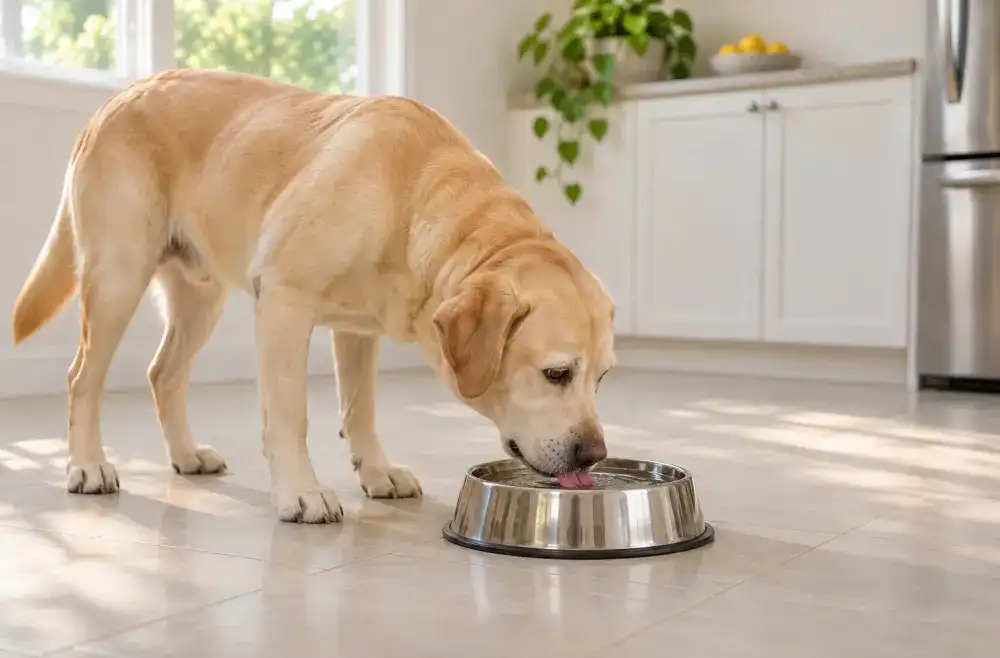
At home, it usually looks like this: the water bowl empties faster, there are more trips outside or accidents indoors, and your dog seems hungry all the time but is losing weight.
Keep an eye on the eyes, too. Diabetic dogs commonly develop cataracts, so cloudy eyes or new clumsiness, like bumping into furniture, can be an early clue.
When It’s an Emergency: Diabetic Ketoacidosis
Vomiting, refusing food, weakness or sweet-smelling breath can signal diabetic ketoacidosis (DKA), a life-threatening complication of high blood sugar. This needs care right away, so please don’t wait it out at home. Reach out for urgent care in Johns Creek, GA.
For owners who have just heard the diagnosis and feel overwhelmed, I often think about a cat named Fred. Fred’s diagnosis absolutely rocked his owners’ world. They were thinking, “We’re never going to be able to travel again. We’re going to have to sit around and care for this cat all the time.”
Fred was a wake-up call for me. Sometimes we do this so often that we forget how big a deal it is to people. It’s familiar to us in veterinary medicine, but to the pet owner, this is a big deal. It feels like a lot of work.
Thankfully, life with a diabetic dog or cat can be fairly simple once you have it under control. They get used to their injections. It’s such a small needle that, with a little distraction, most of the time they don’t even notice. It’s a lot at first to figure everything out, but once you have that routine established, life can feel pretty normal again.
How Is Diabetes in Dogs Diagnosed?
Diabetes in dogs is diagnosed by finding persistently high blood sugar together with glucose in the urine, confirmed with bloodwork and a urinalysis.
Blood and Urine Tests
The hallmark abnormality is persistent fasting hyperglycemia: blood glucose stays elevated even when the dog is fasted. Sometimes we also see elevated liver enzymes.
Often, these dogs have glucosuria, meaning glucose in the urine, and sometimes protein in the urine as well. When you have persistent fasting hyperglycemia along with glucose in the urine, that strongly suggests diabetes.
The tricky part is that stress can raise blood glucose. Most dogs are stressed when they come into the hospital, so we have to consider whether an elevation is related to stress or diabetes. A fructosamine measurement is a helpful tool here. It gives us an idea of the average blood glucose over the previous two to three weeks and helps us determine whether that elevation has been sustained.
Ruling Out Other Causes
Beyond blood glucose, a full workup includes a complete blood count and chemistry panel, plus a urinalysis. Where we go next depends on the signs we’re seeing. If we suspect a urinary tract infection, we’ll do a urinalysis and urine culture. (Urinary signs can be confusing on their own, which I cover in my article on UTIs vs. bladder stones in dogs.) If the dog has cataracts, we’ll evaluate the eyes. If they’re losing weight, we may need to investigate other causes, too.
I also check for other conditions and medications that affect blood sugar, like Cushing’s disease or steroids. Routine wellness bloodwork and senior screening through preventive care in Johns Creek, GA are often how we catch diabetes early, before canine diabetes signs become obvious at home.
How Is Diabetes in Dogs Treated with Insulin?
Diabetes in dogs is treated with insulin injections, usually twice a day, paired with consistent meals and routine; insulin is required and cannot be replaced by diet alone.
Insulin Basics
Insulin is given as a small injection just under the skin, most often twice a day at consistent times, right after a meal. Most diabetic dogs need two injections daily, and the needle is tiny.
Diet and Routine
Dietary therapy is an important part of getting diabetes under control. I want to use the least amount of medication needed to manage it effectively. For dogs, we typically recommend a diet with complex carbohydrates, high fiber and low fat. The fiber helps slow glucose absorption and reduce those blood sugar fluctuations after a meal.
We also talk about making sure your dog is eating before you give the insulin injection, and following the feeding and insulin plan we’ve set for your individual dog. Steady feeding times and steady activity keep blood sugar more stable.
For intact females, I recommend spaying. The hormones of an intact female cause insulin resistance, and spaying can make regulation far easier.
The First Few Weeks
We have owners come in for an entire appointment with one of our technicians. We show them how to draw the insulin into the syringe and how to give the injection. That appointment is about education and helping reduce the fear around giving injections.
From there, dose adjustments depend on the individual case. The first weeks to months are about finding the right dose, which takes patience and a few rechecks. That’s normal, not a setback.
The traditional way of monitoring was a blood glucose curve. The dog would stay in the hospital for about eight hours, and we’d check blood glucose about every two hours to see how well it was being controlled. But a dog sitting in the hospital all day can be stressed, and that can affect the readings. Often, we’ll use a continuous glucose monitor instead, so we can monitor at home. We can see the readings in an app and use that information to guide insulin adjustments.
What Does Day-to-Day Life Actually Look Like?
Day-to-day life with a diabetic dog means a steady routine of twice-daily insulin, consistent meals and exercise, and regular monitoring, which most families find becomes second nature.

Table 3: Insulin & Day-to-Day Management
| Part of the Routine | What It Involves | Notes |
|---|---|---|
| Insulin injections | A small under-the-skin injection, most often twice a day at about the same times. | Most diabetic dogs need two injections daily; the needle is tiny and most dogs tolerate it well |
| Meals paired with insulin | Two equal meals a day, each given right before the insulin dose. | A consistent, vet-set diet (often higher in fiber) keeps blood sugar steadier |
| A consistent routine | Steady feeding times, portion sizes and activity from one day to the next. | Sporadic or strenuous exercise can drop blood sugar too low, so keep activity consistent |
| Monitoring | Blood glucose checks (at home or at the clinic), glucose curves, and sometimes continuous glucose monitors. | Monitoring guides dose changes; once the dog is stable, rechecks happen every few months |
| Watching for low blood sugar | Recognizing hypoglycemia: weakness, wobbliness, confusion, tremors or collapse. | An emergency; rubbing sugar syrup on the gums and calling the vet is the usual first step. Never change the dose on your own |
Sources: American Animal Hospital Association (AAHA): Diabetes Management for Pets. Merck Veterinary Manual: Diabetes Mellitus in Dogs and Cats.
In real life, the routine is two meals and two injections a day on a schedule, consistent walks, and periodic blood sugar checks at home or at the clinic. Once dogs are regulated, most of them feel and act like themselves again.
I won’t pretend it’s no commitment. It is. But the day-to-day becomes routine quickly, and regular rechecks keep things on track. Our Wellness Plans in Suwanee, GA make that ongoing glucose monitoring easier to keep up with.
Recognizing Low Blood Sugar
There isn’t one single sign of low blood sugar that every dog will show. It can look different from one dog to another. Watch for sudden weakness, unusual sleepiness, confusion, wobbliness, shaking or tremors. In more severe cases, a dog may collapse or have a seizure. They don’t need to show every sign for it to be an emergency.
If you suspect low blood sugar, contact your veterinarian or an emergency hospital immediately. If your dog is awake and able to swallow, offer food. Your veterinary team may also instruct you to rub a small amount of corn syrup or honey on the gums as a temporary measure while arranging care. Don’t force food or liquid into a dog that is unconscious or seizing, and don’t put your fingers in its mouth.
Get veterinary instructions before giving more insulin, and never change the dose on your own. Even if your dog improves, they still need veterinary guidance, because their blood sugar can drop again.
Frequently Asked Questions
Can a dog live a normal life with diabetes?
Yes, for most dogs. Once I have a dog regulated on daily insulin with a steady routine, most of them feel and act like themselves again. It does take commitment, especially in the first few weeks, but the routine becomes second nature for most families and their dogs.
Is diabetes in dogs curable?
No. Remission is rare in dogs, so insulin is a lifelong treatment. The goal is diabetes that’s well managed rather than cured, and that goal is very achievable. With consistent insulin, a steady diet and regular monitoring, most diabetic dogs live good-quality lives for years.
How much do insulin injections hurt my dog?
Very little. The needle is tiny and goes just under the skin, and with a little distraction, most dogs don’t even notice. Our technicians spend a full appointment showing you how to draw up and give the injection, so you can feel comfortable before you ever do it at home.
What are the signs of low blood sugar, and what do I do?
Watch for weakness, wobbliness, confusion, tremors or collapse. Call your vet or an emergency hospital right away. If your dog is awake and can swallow, offer food, and your vet may have you rub corn syrup or honey on the gums while you arrange care. Never change the insulin dose on your own.
Will my diabetic dog go blind?
Many diabetic dogs develop cataracts, which can affect vision over time. Good blood sugar control helps, and cataract surgery is sometimes an option for the right candidate. Even with reduced vision, dogs adapt remarkably well, especially in a familiar home with a predictable routine.
Conclusion: Living Well With a Diabetic Dog
Canine diabetes is a common, manageable disease. The keys are catching the signs early, confirming the diagnosis, starting insulin, and settling into a steady daily routine with regular monitoring.
If you’re noticing more drinking, more urinating or weight loss despite a big appetite, please schedule a veterinary appointment in Johns Creek, GA. For dogs already on insulin, our Wellness Plans in Alpharetta, GA make ongoing rechecks and glucose monitoring easier.
Don’t dismiss canine diabetes signs like changes in thirst, urination or weight, or chalk them up to getting older or the weather. Diabetes can be tough when it’s unmanaged, and it can have a pretty detrimental effect on quality of life. Once it’s under control, and once you know what low blood sugar looks like, life can feel pretty normal again.