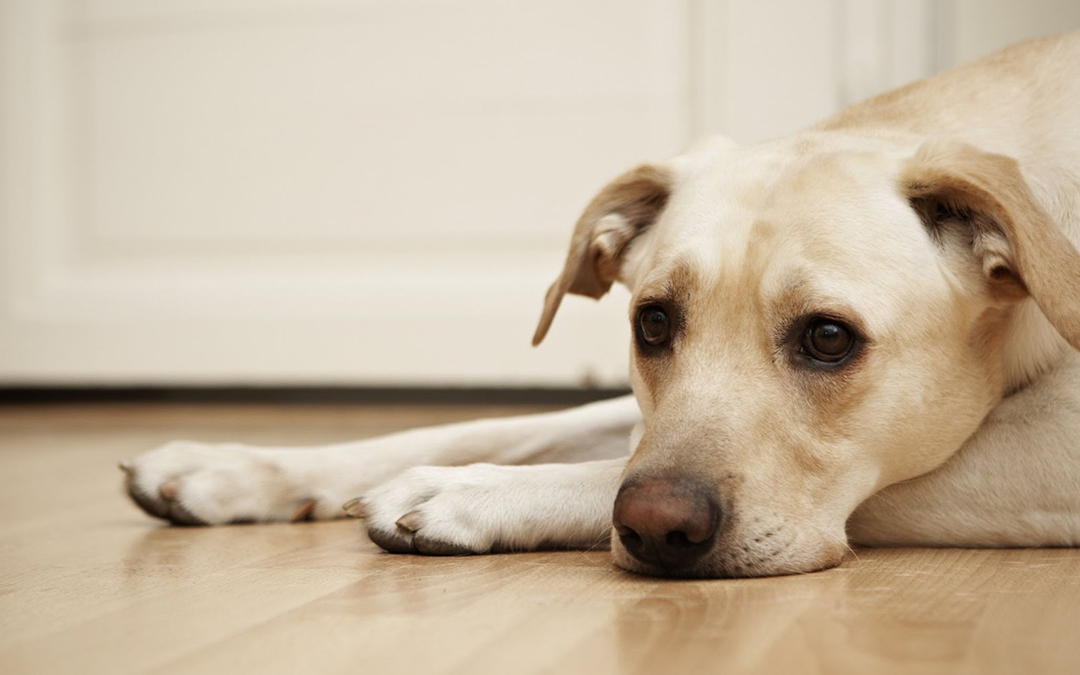
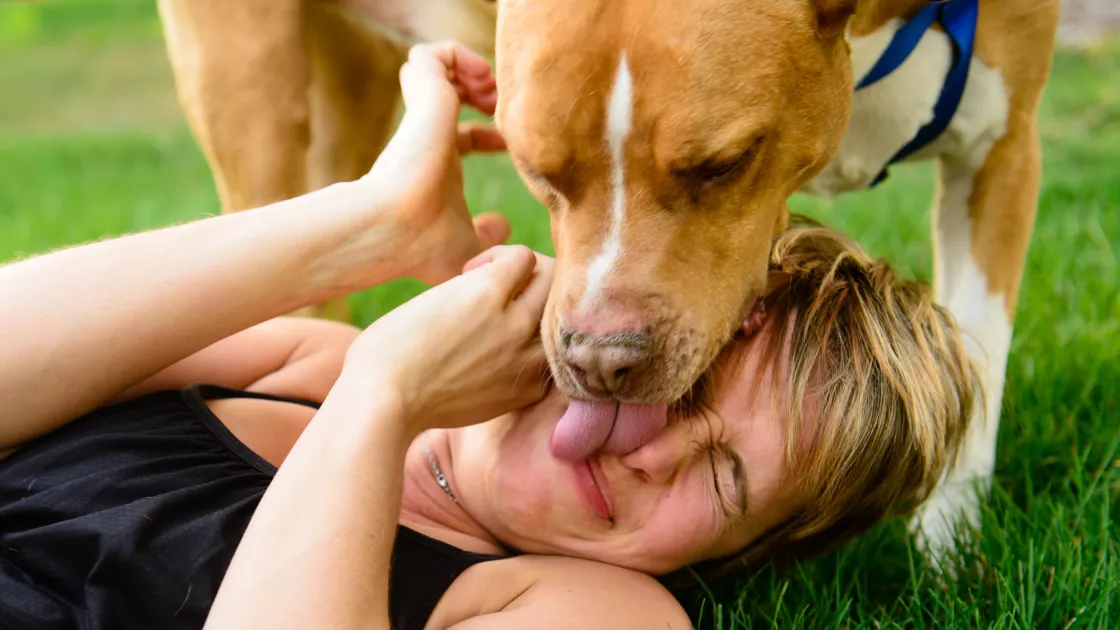
Pet owners have been swapping stories about dog slobber for years, and the question comes up more often than you’d think: are dogs’ mouths cleaner than humans? You may have heard people say a dog’s mouth is cleaner than a human’s or that dog saliva helps wounds heal faster. Some swear their pup kissing them on the cheek is no big deal, while others panic at the idea of germs. With so many opinions floating around, knowing what’s actually true can help you understand what’s safe, what’s not, and how to keep your dog’s mouth healthy at home.
We’re covering where the myth came from, what kinds of bacteria live in a dog’s mouth, the difference between a dog’s mouth and a human’s mouth, and how to support good dental health as a pet owner. And if you ever need professional dental care, your Johns Creek Vet team is always here to help.
Are Dog Mouths Cleaner Than Humans? Where The Myth Started

The idea that a dog’s mouth is cleaner than a human’s likely grew from the way dogs lick wounds. People noticed that many of these wounds didn’t become infected, so they assumed that dog saliva must be cleaner. In reality, dog saliva contains enzymes that can help loosen debris, but that doesn’t make a dog’s mouth cleaner overall. It just means it works differently than ours.
Another part of the myth comes from the fact that dogs show fewer visible infections in their mouths, even when they have significant dental disease. They often hide pain well, so their mouths may look “fine” on the surface even when problems like gum recession or tooth root abscesses are starting to form.
Comparing Bacteria: Dog Mouths vs Human Mouths
Are dogs mouths cleaner than humans? The most accurate answer is that neither one is cleaner. They’re simply different environments with different bacterial families living inside them.
Humans and dogs both carry hundreds of types of dental bacteria. Humans carry bacteria suited for breaking down softer, more varied diets, and dogs carry bacteria that evolved for tearing meat, crunching kibble, and processing dog food. Both environments can develop mouth plaque, inflammation, and infection when proper dental care is missing.
What Kinds of Bacteria Live in a Dog’s Mouth?
Dogs have their own mix of bacteria that are normal for them but different from what humans carry. Some of the most common are Pasteurella, Porphyromonas, and Capnocytophaga. These bacteria usually don’t bother dogs at all, but they can cause infections in people if they get into the bloodstream through a bite or a scratch.
If you’ve ever been bitten by a dog and noticed the area swelling or turning red, that reaction is often caused by these bacteria. It doesn’t mean your dog is “unclean.” It simply means the bacteria that live comfortably in a dog’s mouth don’t always interact well with the human body.
Health Risks Linked to Dog Saliva
Even though dog licks feel sweet and affectionate, it’s still helpful to know how dog saliva interacts with human skin. Skin absorbs saliva poorly, which is a good thing. This natural barrier protects us from many bacterial infections.
Still, issues can develop when:
- Dog saliva enters an open wound
- A dog bites or scratches deep enough to break the skin
- The person receiving the lick is immunocompromised
- There is exposure from a wild animal or stray
Diseases from dog saliva are rare for healthy adults, but caution matters. Anyone with a compromised immune system should limit face licking and avoid saliva contact with open skin. The same goes for children, since their skin is thinner and they may touch their eyes or mouths afterward.
If a wild animal shows signs of illness and your dog is exposed, contact local animal control and your Suwanee, GA veterinarian right away.
Dental Health Habits: Humans vs Dogs
Humans have the advantage of brushing their own teeth daily. Dogs don’t…at least not unless you brush your dog’s teeth for them. When a dog eats food, particles get trapped along the gum line just like they do in our own teeth. If these particles stay put, dental bacteria start producing plaque. Over time, this can turn into tartar, inflammation, and periodontal disease.
Many dogs also experience:
- Loose or broken teeth
- Baby teeth that don’t fall out (retained baby teeth bleeding can occur)
- Advanced periodontal disease
- Tooth pain
- Bad breath gum recession
- Tooth root abscesses
A dog’s mouth may not show these issues early on, which makes regular oral examinations even more important.
Why You Need to Clean Your Dog’s Teeth Regularly
Fighting dental disease starts with awareness. Even though the saying “a dog’s mouth is cleaner” still floats around, dental disease is one of the most common medical issues veterinarians treat in adult dogs. Left alone, it can lead to painful recession tooth root changes, infections, difficulty eating, and problems that extend beyond the mouth, including the nervous system and heart.
At Modern Vet, we see how helpful early care can be for preventing future decay and keeping a clean and healthy mouth through every stage of your dog’s life. A dental checkup with a Vet in Alpharetta gives your pet a thorough oral examination, dental X-rays when needed, and a chance to catch issues before they become serious.
Common Questions About Dog Mouths and Human Health
Is a dog’s mouth cleaner than a human’s mouth?
Not exactly. A dog’s mouth is cleaner in some ways and dirtier in others. Saying a dog’s mouth is cleaner than a human’s oversimplifies the whole picture.
Can dog licks help wounds heal?
Not reliably. Licking can introduce bacteria. If your pet has a cut or irritation, licking can make it worse.
Can you get bacterial infections or diseases from dog saliva?
For most healthy adults, an occasional kiss from your pup is fine. Just keep saliva away from open wounds and avoid it entirely if you are immunocompromised.
Does diet matter?
Yes. A raw food diet can influence the types of bacteria in a dog’s mouth. Clean your dog’s teeth regularly if your pup eats a raw diet, since it may add more oral bacteria.
Should I brush my dog’s teeth?
Yes, you should brush your dog’s teeth. Regular brushing is the best way to prevent plaque buildup, reduce bad breath, and slow the progression of dental disease.
How To Keep Your Dog’s Mouth Healthy at Home
There are a few simple ways to support a clean and healthy mouth. At home dental care goes a long way between professional visits.
Brush Your Dog’s Teeth Regularly
If you’ve ever wondered, “Do I really need to brush my dog’s teeth,” the answer is yes. Even brushing a few times a week can help prevent plaque buildup. Start slowly and use a child’s toothbrush or finger brush paired with doggie toothpaste. Avoid human products that contain fluoride treatment levels meant for people.
Try Dental Chews and Pup Treats Made for Oral Health
Dental chews help remove mouth plaque mechanically. They’re great for dogs who refuse brushing or when you need extra support.
Use Proper Dental Care Tools
Products like dental sealant, enzymatic toothpaste, or oral rinses can help maintain a clean a dog’s mouth between professional cleanings.
Keep an Eye on Early Warning Signs
Broken teeth, bad breath, gum line changes, mouth swelling, and difficulty chewing are all reasons to schedule a dental appointment with a vet in John’s Creek.
How Often Should Your Dog Get a Professional Dental Exam?
Your pet’s annual dental appointment is the best chance to catch dental disease early. At Modern Vet, we conduct tooth probing, take dental X-rays when needed, and complete a full evaluation of the tooth roots, gums, and surrounding structures. A dental appointment gives you a clear picture of your dog’s oral health and what steps can help prevent future problems.
Regular cleanings also help prevent issues like:
- Tooth root abscesses
- Gum recession
- Advanced periodontal disease
- Loose or broken teeth
- Persistent baby teeth
So…Is a Dog’s Mouth Cleaner?
The real answer to this question is that they’re simply different. A dog’s mouth is cleaner in some ways and dirtier in others, depending on the bacteria present, diet, dental care, and health status. With proper dental care, you can help your pup avoid painful dental disease.
As a pet owner, the best thing you can do is stay aware of changes, clean your dog’s teeth regularly, and schedule a dental visit when anything feels off.
When To See a Veterinarian
Reach out to your vet if your dog shows signs like:
- Persistent bad breath
- Trouble eating
- Bleeding gums
- Pawing at the mouth
- Hesitation with hard food
- Mouth swelling
These can indicate periodontal disease or other issues that need attention. If you’re in need of dental care, reach out to our team or request an appointment. We’re here to help your dog stay healthy, comfortable, and ready for more smiles and snuggles.