

SUMMARY
The pancreas produces digestive enzymes and insulin. Pancreatitis occurs when the pancreas is inflamed. Pancreatitis in dogs ranges from mild episodes to severe, life-threatening emergencies. Know what to watch for with this guide that covers triggers of pancreatitis in dogs, how it’s diagnosed and treated, and when it becomes an emergency that necessitates immediate care.
Pancreatitis in dogs is a challenging condition, as it can be anything from an unpleasant, self-contained couple of days to a full-blown emergency. Knowing which end of the spectrum their dog is dealing with is the hardest part for owners.
As a Veterinarian in Johns Creek, GA, I have plenty of experience treating pancreatitis. But there’s a wide spectrum of pancreatitis, from very mild to very severe, and it can be difficult to definitively diagnose in the exam room. Milder cases can go unrecognized, so putting an exact number on how often we see it is difficult.
There are pancreatic markers and SNAP tests that help us, but it’s not always a clean “yes, pancreatitis” or “no, pancreatitis.” We have to look at the whole picture, including how sick the dog is and what else might be going on.
What is Pancreatitis in Dogs?
Pancreatitis is a condition caused by inflammation of the pancreas, a crucial organ in the abdomen that is instrumental in healthy bodily functions.
The pancreas has two main jobs. The exocrine pancreas function is responsible for producing digestive enzymes that release into the small intestine. The endocrine function produces insulin, which helps regulate blood sugar.
Normally, the digestive enzymes don’t activate until they reach the small intestine. But in pancreatitis cases, the enzymes activate too early while in the pancreas itself, which causes the pancreas to start digesting its own tissue. This is what causes the pancreatic inflammation that can cause serious discomfort and risk organ damage.
What makes pancreatitis in dogs so serious is that the inflammation can spill over and impact nearby abdominal organs and trigger systemic complications throughout the rest of the body.
What Triggers Pancreatitis in Dogs?
In most cases of pancreatitis in dogs, the exact cause is never identified, but there are several widely recognized risk factors, including high-fat diets or dietary indiscretion, obesity, hypertriglyceridemia, endocrine diseases like diabetes mellitus, reactions to certain medications, and hereditary predisposition.
Table 1: What Triggers Pancreatitis in Dogs (Risk Factors & Causes)
| Trigger / Risk Factor | How It Contributes | Notes |
|---|---|---|
| Dietary indiscretion / high-fat meal | A sudden fatty meal — table scraps, trash, or unusual food — can precipitate an acute episode | Eating trash is associated with ~13× risk and table scraps ~2×; the classic “holiday pancreatitis” after fatty treats |
| Obesity / overweight | Excess body fat is linked to higher risk and can worsen severity | ~1.3× increased risk; weight control is one of the few modifiable risk factors |
| Hypertriglyceridemia (high blood fat) | Elevated triglycerides — especially in Miniature Schnauzers — are strongly associated with pancreatitis | Severe hypertriglyceridemia (≥862 mg/dL) ~4.5× risk of elevated pancreatic lipase; a low-fat diet helps control it |
| Concurrent endocrine disease | Diabetes mellitus, hyperadrenocorticism (Cushing’s) and hypothyroidism raise risk | The relationship with diabetes is bidirectional — each condition can worsen the other |
| Certain medications | Potassium bromide and phenobarbital (seizure medications), among others, are linked to elevated pancreatic lipase | Never stop or change a prescribed medication without veterinary guidance |
| Breed predisposition | Miniature Schnauzers, Yorkshire Terriers and Cocker Spaniels are over-represented; Cavalier King Charles Spaniels for the chronic form | Points to a hereditary component in some dogs |
| Idiopathic (no cause found) | In many dogs no specific trigger is identified | Most acute cases are idiopathic — an unfound cause is not the same as no cause |
Sources: Cridge H, Lim SY, Algül H, Steiner JM (2022) J Vet Intern Med 36(3):847-864: New insights into the etiology, risk factors, and pathogenesis of pancreatitis in dogs. Merck Veterinary Manual: Pancreatitis in Dogs and Cats.
Some of these triggers are beyond your control, but I would urge owners to remember that a sudden high-fat meal or a dog getting into the trash and eating unhealthy food are classic triggers for an acute pancreatitis episode. Avoid these the best you can to protect your pup.
Owners of dogs with diabetes mellitus, Cushing’s disease, or hypothyroidism should be extra vigilant in avoiding pancreatitis triggers, as these conditions can all increase the risk. Pancreatitis and diabetes can often worsen one another.
Acute vs. Chronic Pancreatitis: What’s the Difference?
Acute pancreatitis manifests suddenly and can be severe, but is fully reversible in many cases, while chronic pancreatitis is defined by low-grade inflammation that is ongoing and results in permanent changes to a dog’s body over time.
Dogs experiencing acute pancreatitis often experience dramatic, painful symptoms, seemingly out of nowhere. This is the form most likely to become an emergency that requires immediate attention.
Chronic cases of pancreatitis in dogs are frustratingly easy to miss, as the symptoms can be more vague and intermittent, coming and going before an owner can recognize the issue. These cases can progress slowly and quietly, which can predispose dogs to diabetes or exocrine pancreatic insufficiency (EPI).
Acute and chronic pancreatitis can overlap, too. A dog with chronic pancreatitis can still have sudden, acute flare-ups.
What Are the Signs of Pancreatitis in Dogs?
The most common clinical signs that indicate pancreatitis in dogs are vomiting, decreased appetite, abdominal pain, and lethargy. You may also notice a dog adopting a hunched posture with their front end down and rear end up to relieve belly pain.
The vague clinical signs can make identifying pancreatitis in dogs difficult, especially in mild and chronic cases. Sometimes owners chalk up vomiting or diarrhea to, “Oh, my dog just does that,” or, “They probably got into the trash.” Pancreatitis can be super painful. Sometimes owners write off the GI signs as not that big of a deal, when in reality their dog may be pretty uncomfortable.
When Does Pancreatitis Become an Emergency?
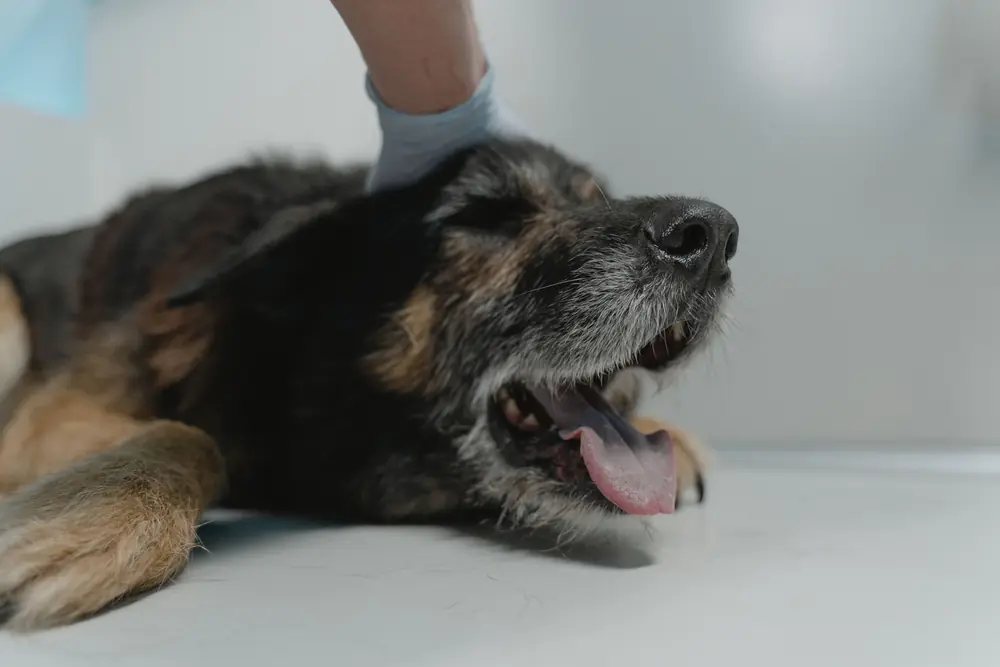
Serious signs that indicate a dog needs immediate emergency care include persistent/non-stop vomiting, severe abdominal pain, collapsing or major weakness, jaundice (yellow gums or eyes), bruising, bleeding, and labored breathing.
Severe pancreatitis cases can result in pancreatic necrosis, disseminated intravascular coagulation (DIC), and organ failure. These can lead to dire outcomes without aggressive treatment.
Table 2: The Pancreatitis Severity Spectrum: When It Becomes an Emergency
| Presentation | Typical Signs | What It Means / Action |
|---|---|---|
| Chronic / mild | Vague, intermittent signs — decreased appetite, occasional vomiting, mild lethargy, low-grade GI upset | Easily mistaken for a “sensitive stomach”; can smolder and flare. Warrants a vet visit and pancreatic lipase (cPL) testing |
| Acute (uncomplicated) | Vomiting, abdominal pain (hunched or “praying” posture), decreased appetite, lethargy, sometimes diarrhea | Needs prompt veterinary evaluation; most dogs recover with supportive care over several days |
| Severe / emergency | Persistent vomiting, marked abdominal pain, dehydration, collapse, fever or subnormal temperature, jaundice | Emergency. Risk of systemic complications — SIRS, DIC, pancreatic necrosis, multiple organ failure. Requires hospitalization and aggressive treatment |
| Systemic-complication red flags | Bruising or bleeding (DIC), laboured breathing, yellow gums or eyes, vomiting that won’t stop, weakness or collapse | Seek urgent care immediately — these signal a life-threatening course with a guarded prognosis |
Sources: Cridge H et al. (2022) J Vet Intern Med. Merck Veterinary Manual: Pancreatitis in Dogs and Cats.
The pancreatitis label alone doesn’t tell me everything I need to know about that patient. Not every dog with pancreatitis needs to be hospitalized. Milder cases can often be managed as outpatients, while moderate to severe cases are more likely to need hospitalization.
The owner isn’t sitting at home thinking, “Is this pancreatitis or is it not pancreatitis?” That’s not how it works. They’re seeing a dog that’s vomiting, having diarrhea, or not eating.
What worries me is how that dog is doing overall. Are they dehydrated? Are they painful? Can they keep food and water down? Can we get their symptoms under control?
If outpatient treatment isn’t working, we need to reassess. The pancreas may be more involved than we originally thought, or the illness may be progressing. We may need to say, “What we’re doing isn’t enough. This dog needs to be hospitalized.” But a dog that’s already significantly affected may need hospitalization from the start.
Most dogs recover, but the prognosis is still guarded with severe cases, which is why quick and early action matters. If you have even the slightest suspicion your dog is showing any of these emergency signs, bring them to our Urgent Care in Johns Creek, GA right away.
How Is Pancreatitis Diagnosed in Dogs?
We diagnose pancreatitis by recognizing clinical signs and a combination of a pancreatic-specific blood test (canine pancreatic lipase, cPL/Spec cPL) and an abdominal ultrasound, as no single test can diagnose it on its own.
It starts with the history. Has there been a sudden change in diet? Did they get into the trash? Did somebody feed them an old hamburger? Could they have eaten something toxic or something they weren’t supposed to? As I’ve said before, there are a million things under the sun that cause vomiting and diarrhea, so you start working through those possibilities.
Some diagnostic methods include:
- Pancreatic Lipase Testing: Usually the first step is a canine pancreatic lipase immunoreactivity (cPLI/Spec cPL), as this is the most pancreas-specific blood test. A lot of people think of pancreatic markers as “yes, pancreatitis” or “no, pancreatitis.” But really, you use them as little nuggets of evidence to piece the whole puzzle together.
- Complete Blood Count (CBC) and Chemistry: We do blood work to look for things like kidney disease, liver problems, or other reasons they might be having these GI signs. Not pancreatitis-specific, but helps assess related issues like dehydration and organ function to get an idea of how sick the dog is overall.
- Abdominal Ultrasound: The preferred imaging method to visualize the pancreas and spot complications like fluid accumulations, pancreatic pseudocysts, and necrosis. Ultrasound is great because it can give us clues about whether the pancreas is inflamed and what else might be going on in the abdomen. Again, it’s another piece of the puzzle.
- Abdominal Radiographs (X-Rays): Also not pancreatitis-specific, but these help rule out other causes of vomiting and abdominal pain, like foreign bodies or obstructions.
Histopathology has traditionally been considered the gold standard, but even a biopsy can miss disease depending on where the sample is taken. It’s invasive and generally isn’t something we need to do to make a clinical diagnosis and start treatment.
No one test can confirm pancreatitis in dogs. We put the history, physical exam, bloodwork, and imaging together rather than relying on any single test. Annual wellness exams and bloodwork, part of our Preventive Care in Johns Creek, GA, can help catch these issues before they become serious.
How Is Pancreatitis Treated in Dogs?
While how severe a case is dictates how aggressive care needs to be, supportive care is the basis of most treatment methods, such as intravenous fluids, pain management, anti-nausea medication to control vomiting, and early nutritional support.
Table 3: How Pancreatitis Is Treated in Dogs (by Severity)
| Severity | Core Treatment | Notes |
|---|---|---|
| Mild / outpatient (select cases) | Brief dietary rest then early return to a low-fat / ultra low-fat diet, anti-nausea medication, pain control, oral hydration | Early nutritional support is now preferred over prolonged fasting; many mild cases are managed with close monitoring |
| Moderate (hospitalized) | Intravenous (IV) fluid therapy, injectable anti-emetics to control vomiting, pain management, early enteral nutritional support | Fluid therapy to correct dehydration and maintain pancreatic perfusion is the cornerstone of care |
| Severe / critical | Aggressive IV fluids, multimodal pain control, anti-emetics, plasma or other supportive care, treatment of complications, appetite stimulants | Intensive 24-hour care; prognosis guarded. Surgery is reserved for specific complications (infected necrosis, pseudocyst, biliary obstruction) |
| Targeted therapy | Fuzapladib sodium (Panoquell-CA1) injection — reduces activation of inflammatory cells | First FDA conditionally approved drug for acute onset of canine pancreatitis (Nov 2022); used alongside, not instead of, supportive care |
| Long-term management | Ongoing low-fat / ultra low-fat diet, weight control, avoiding high-fat treats, managing concurrent disease (e.g., diabetes) | Reduces the risk of recurrence and of progression to chronic pancreatitis or exocrine pancreatic insufficiency (EPI) |
Sources: Cridge H et al. (2022) J Vet Intern Med. AVMA: FDA conditionally approves first drug for acute onset of pancreatitis in dogs. Today’s Veterinary Practice: Treatment Options for Canine Pancreatitis.
Fluid therapy is the foundation of pancreatitis treatment. IV fluids help address dehydration and maintain blood flow to the pancreas. Managing pain and controlling vomiting are also hugely important to support the patient and get them to start eating and keeping down food. Appetite stimulants may help during recovery.
For a long time, the standard advice was to withhold food for days. We now know that early nutritional support, feeding a low-fat diet as soon as the dog can keep it down, improves outcomes.
We also have a newer medication called Panoquell-CA1, or fuzapladib sodium. It’s conditionally approved by the FDA to manage the clinical signs associated with the acute onset of pancreatitis in dogs.
Basically, part of the problem is this vicious cycle of inflammation. The pancreas gets injured, the body sends inflammatory cells into that tissue, and those cells can contribute to more damage. Panoquell helps inhibit certain white blood cells, called neutrophils, from moving into the inflamed tissue. The goal is to help interrupt that cycle and limit further damage. It’s used alongside supportive care, not instead of it.
In my clinic, anecdotally, I’ve seen it work very, very well. But it comes with a high price tag, and I still want more data to understand which patients benefit most and when that benefit justifies the cost. I’m encouraged by what I’ve seen, but I think we’re still learning where it fits.
Generally, surgery is uncommon outside of specific local complications.
What’s the Long-Term Outlook? And Can Pancreatitis Be Prevented?
Most dogs recover fully from mild pancreatitis, but they remain susceptible to recurrence and progressing to chronic pancreatitis, which is why long-term diet and weight management are so important to prevention.
Just one episode of pancreatitis in dogs leaves them at risk of repeating, and recurring or continuous inflammation can lead to chronic pancreatitis, as well as other issues like diabetes mellitus and exocrine pancreatic insufficiency (EPI).
Some pancreatitis triggers are out of your control. But there are steps you can take to help. Diet is huge in these dogs. Keeping them at an appropriate weight is important, and there are some great prescription low-fat diets that we use to help manage pancreatitis. Avoiding fatty table scraps and being consistent about what they’re eating are important parts of that conversation.
I also consider probiotics as part of supporting intestinal health. They don’t treat pancreatitis directly. My thinking is that supporting the intestines may indirectly help the pancreas, too. That’s my clinical opinion, rather than a claim that probiotics are a proven pancreatitis treatment.
Dogs that have recovered from pancreatitis should continue to be monitored. Our Preventive Care in Duluth, GA includes periodic bloodwork and weight checks, so we can address pancreatitis quickly if any red flags come up.
Frequently Asked Questions
Can a dog recover from pancreatitis?
Yes, most dogs recover fully from pancreatitis. But I think pancreatitis is a buzzword. It gets thrown around a lot, but there’s a big difference between a mild case that might go undiagnosed and a severe case where the dog is really sick and needs hospitalization. Most mild and acute cases recover with prompt supportive care, but the severity of a case determines how aggressive treatment should be.
What can I feed a dog with pancreatitis?
Be sure to consult your vet for the best direction specific to your dog. But generally, you should prioritize a low-fat or ultra-low fat diet for a dog suffering from pancreatitis. Early feeding as soon as a dog can keep food down helps, despite many owners believing the myth that they should utilize prolonged fasting.
Is pancreatitis in dogs painful?
Pancreatitis can be very painful. Generally speaking, these dogs present with GI signs: vomiting, diarrhea, sometimes lethargy or not wanting to eat. A key finding on the physical exam is pain when we palpate the abdomen. Sometimes they’re hunched over, or they might squeal when you pick them up.
How long does pancreatitis take to resolve?
Mild cases of pancreatitis in dogs typically resolve in a matter of days when it is addressed quickly and the patient receives the proper treatment. More severe cases may require hospitalization and take longer to subside. Chronic cases need regular, ongoing management to avoid recurrences.
What foods cause pancreatitis in dogs?
High-fat diets are one of the most common triggers for pancreatitis in dogs. Fatty foods, including table scraps or food the dog finds in the trash, can increase the risk of pancreatitis and cause an acute episode, so they should be avoided whenever possible.
Conclusion
Not all pancreatitis cases are created equal. There’s a wide spectrum for pancreatitis in dogs, ranging from mild forms to severe cases. Most dogs recover fully, but the difference between a mild case and an emergency is often how quickly the condition is recognized and addressed.
Know the signs, avoid giving your dog high-fat foods that serve as triggers, and don’t hesitate to visit us for a Veterinary Appointment in Johns Creek, GA if your dog is vomiting, in visible pain, or won’t eat.
Here at ModernVet, our Wellness Plans in Suwanee, GA provide ongoing monitoring for pancreatitis in dogs, both for dogs at higher risk and for those that have recovered, to help avoid recurrences.
Remember, for my patients with a history of pancreatitis, if they start vomiting or having diarrhea, I don’t want owners saying, “Let’s see how they do over the next couple of days.”
No, let’s address it early. Nip it in the bud. Contact us so we can decide what they need. If you wait and the dog gets sicker and more dehydrated, it can become harder to treat.


